

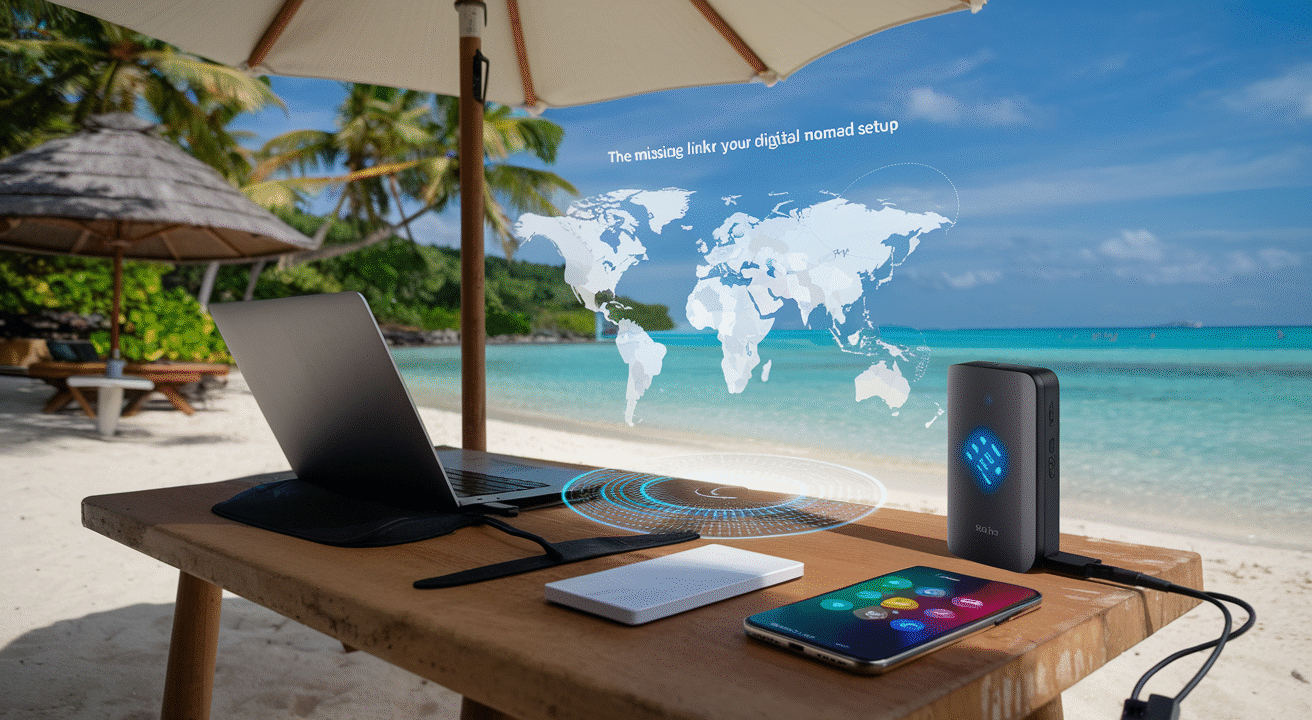
Ever met a digital nomad who somehow managed to lose $3,500 worth of equipment in a single coffee shop incident? That was me last year. The gut-punch moment when I realized my entire mobile office—gone.
Here’s what’s crazy: 90% of remote workers are walking around with expensive tech completely unprotected by the one simple solution that could save them thousands.
The world of digital nomad security tools has exploded since 2023, but most location-independent professionals still rely on outdated solutions that leave their livelihood vulnerable.
Want to know the single tech investment that saved my business after my Thailand disaster? It’s not what you think—and it costs less than those fancy noise-canceling headphones everyone’s obsessed with.
Essential Tech Gear for Location-Independent Work
Essential Tech Gear for Location-Independent Work
A. Lightweight Laptops with Maximum Performance
Ever noticed how the right laptop can make or break your nomadic lifestyle? Those clunky 5-pound monsters aren’t cutting it anymore. Today’s digital nomads are flocking to ultralight powerhouses like the MacBook Air M2 and Dell XPS 13 that weigh under 3 pounds but pack enough processing punch to handle video editing from a beach in Bali.
B. Multi-Purpose Smartphones and Their Must-Have Apps
Your phone isn’t just for Instagram sunset pics anymore. It’s your backup hotspot, emergency computer, banking hub, and translation tool all rolled into one pocket-sized lifesaver. Load it up with dual eSIMs for seamless country hopping, and don’t sleep on apps like Wise for currency exchanges or WorkFrom to find reliable workspaces with decent WiFi in unfamiliar cities.
C. Portable Second Monitors for Enhanced Productivity
Who says you need to sacrifice screen real estate just because you’re working from a hammock? Portable monitors like the ASUS ZenScreen or Lenovo ThinkVision M14 weigh barely a pound but instantly double your workspace. They connect via a single USB-C cable and can transform any cafe table into a proper dual-monitor setup in seconds.
D. Noise-Canceling Headphones: Your Virtual Office Walls
Try working next to a construction site in Mexico City or a bustling coffee shop in Bangkok without these bad boys. Premium noise-canceling headphones like Sony WH-1000XM5 or Bose 700s don’t just block distractions—they create an instant office environment anywhere. Plus, their crystal-clear microphones mean clients never have to know you’re taking calls from a rooftop bar in Lisbon.
Staying Connected Anywhere in the World
International SIM Cards vs. eSIMs: Which to Choose
The connectivity game has changed dramatically in the last few years. Remember when finding WiFi abroad meant hunting down sketchy internet cafés? Those days are gone.
International SIM cards were once the gold standard – swap out your home SIM, pop in a local one, and you’re good to go. But honestly? They’re becoming dinosaurs.
eSIMs are the new kid on the block, and they’re absolutely crushing it. No physical card to lose, no tiny SIM ejector tool to carry (and inevitably misplace), and you can set everything up before you even board your flight.
Here’s the breakdown:
| Feature | Physical SIMs | eSIMs |
|---|---|---|
| Setup time | 15-30 minutes | 5 minutes |
| Lost/damage risk | High | None |
| Multiple plans | Need multiple SIMs | Store multiple profiles |
| Availability | 90+ countries | 170+ countries |
| Device compatibility | All phones | Newer models only |
The catch? Your device needs to support eSIM technology. Most phones from 2020 onward do, but double-check yours before banking on this option.
Pro tip: Don’t delete your eSIM profiles after leaving a country. Keep them stored – you’ll thank yourself when you return and can activate service instantly from the airport.
Portable WiFi Hotspots Worth Investing In
I’ve tested dozens of portable WiFi devices across six continents, and I’ll tell you straight up – they’re not all created equal.
The game-changer most digital nomads miss? Dedicated 5G hotspots with band-switching capabilities. These babies automatically hunt for the strongest signal regardless of which cellular technology is dominant in your area.
Top picks that won’t let you down:
-
Skyroam Solis X – The “smart spot” with built-in VPN and a standout 16-hour battery life. Perfect for those marathon work sessions in remote locations.
-
Netgear Nighthawk M5 – Pricey but worth every penny. This thing pulls in signal where your phone shows “No Service” and supports up to 32 devices simultaneously.
-
GL.iNet Beryl AX – The budget-friendly option that punches above its weight. Great for teams traveling together.
What most people don’t realize is that hotspot placement matters enormously. Placing your device near a window or at elevation can double your speed. I’ve literally taped mine to windows in desperate situations!
And don’t sleep on battery management. Most hotspots have a web interface where you can disable unnecessary bands to extend battery life by 30-40%.
Internet Connection Boosters and Signal Enhancers
Working from a beachside bungalow sounds dreamy until your Zoom call freezes mid-presentation. Been there, felt that panic.
Signal boosters are the unsung heroes of the digital nomad toolkit. These devices can transform a barely-there connection into something usable.
The tech behind them is simple but brilliant. They capture weak signals, amplify them, and rebroadcast them within your workspace. The result? That 1-bar connection becomes 4 bars of usable internet.
For cellular boosting, WeBoost’s Drive Reach has saved my skin more times than I can count. It’s technically for vehicles, but works perfectly in temporary accommodations too.
For WiFi extension, the TP-Link RE650 AC2600 is ridiculously effective at grabbing distant WiFi signals – like from that café down the street – and bringing them into your room.
And here’s the hack 90% of nomads miss: directional antennas. A simple Yagi antenna pointed at the nearest cell tower can increase your signal strength by 10-15dB. That’s the difference between no connection and streaming-quality internet.
Cost-benefit analysis? A decent booster runs $100-300 but can save you from booking emergency accommodation or missing deadlines. Worth. Every. Penny.
VPN Solutions for Security and Access
The public WiFi trap is real. That free airport connection? It might be costing you more than you think.
VPNs aren’t just for watching geo-restricted Netflix anymore (though that’s a nice bonus). They’re essential armor against increasingly sophisticated cyber threats targeting remote workers.
The VPN market is crowded, but three stand out for digital nomads:
NordVPN brings the speed – crucial when you’re already dealing with sketchy connections. Their NordLynx protocol reduces the typical VPN speed penalty to almost nothing.
ExpressVPN offers the widest server coverage globally. When you need to appear in a specific country for work platforms or banking access, they’ll have a server there.
Mullvad flies under the radar but deserves attention. Their privacy-first approach doesn’t even require an email address to sign up – perfect for those working in countries with surveillance concerns.
The mistake most nomads make? Using a single VPN. Smart travelers maintain at least two separate services. When one gets blocked (looking at you, streaming platforms), you’ve got a backup ready.
And please, for the love of your digital security, use a VPN that offers a kill switch. This feature cuts your internet if the VPN drops, preventing accidental data exposure. It’s saved my bacon countless times.
Backup Connection Options for Critical Work Situations
The golden rule of remote work? Never trust a single internet source for mission-critical tasks.
I learned this lesson the hard way during a client presentation from Bali when a construction crew severed the main fiber line to my neighborhood. Not fun.
Your backup arsenal should include:
-
Tethering capabilities – Your phone should be ready to serve as a hotspot at a moment’s notice. Pre-configure this setup and test it monthly.
-
Local SIM with different carrier – Diversify your connectivity. If one network goes down, another might still function.
-
Offline work modes – Configure your essential apps to function offline. Both Google Workspace and Microsoft Office have robust offline capabilities few people fully utilize.
-
Nearby connectivity map – Before any important call, scout your area for backup locations with reliable WiFi. Coffee shops, hotel lobbies, and coworking spaces should be pre-vetted.
Here’s the strategy most nomads miss: scheduled redundancy testing. Monthly, force yourself to work using only your backup solutions for half a day. You’ll quickly discover what’s working and what isn’t.
And the ultimate backup hack? Build relationships with local digital nomads. A quick message to a friend with a different internet provider has saved countless deadlines. The nomad community is surprisingly generous when connectivity emergencies strike.
Power Solutions for the Constantly Moving
Long-lasting Battery Banks You Can Trust
I’ve tested dozens of power banks over the past four years of my nomad life, and trust me—your power bank choice can make or break your workday.
Most digital nomads grab whatever’s on sale, then find themselves stranded with dead devices mid-flight or during crucial Zoom calls. Big mistake.
The game-changers right now? Power banks with 20,000+ mAh capacity and 65W+ charging capabilities. These beasts can fully juice your laptop 1-2 times and your phone 5+ times.
My top picks:
| Battery Bank | Capacity | Fast Charging | Weight | Price |
|---|---|---|---|---|
| Anker 737 | 24,000mAh | 140W | 1.4 lbs | $149 |
| Omni 20+ | 20,000mAh | 100W | 1.1 lbs | $199 |
| Zendure SuperTank Pro | 26,800mAh | 100W | 1.3 lbs | $179 |
The Anker 737 has become my ride-or-die. Yesterday it powered my entire 8-hour workday at a beach café in Bali with spotty electricity.
Universal Travel Adapters with USB-C Power Delivery
Nothing screams “rookie nomad” like carrying six different adapters.
The smart move? One universal adapter with USB-C Power Delivery.
Your adapter should handle these voltage ranges:
- North America/Japan: 100-127V
- Europe/Asia/Africa: 220-240V
Modern adapters with USB-C PD ports can deliver up to 100W of power—enough to charge a MacBook Pro while you use it. This is non-negotiable tech in 2025.
My current favorite is the Epicka Gen 2. It works in 200+ countries, has one AC outlet plus 4 USB ports (including 65W USB-C), and weighs just 6 ounces. It saved my bacon last month when I had to charge my laptop, phone, and camera simultaneously in a tiny Portuguese café with exactly one outlet.
The Skross World Adapter MUV USB is another solid option—slightly bulkier but nearly indestructible. I’ve watched mine survive being dropped on concrete floors across three continents.
Solar Charging Options for Remote Locations
Working from remote beaches or mountain cabins sounds dreamy until your battery hits 10% with no outlet in sight.
Solar chargers have finally evolved beyond gimmicks. The latest models can genuinely power your tech stack in off-grid locations.
Key specs to look for:
- Minimum 21W output (28W+ preferred)
- Multiple USB ports (including USB-C)
- Weather resistance
- Compact foldable design
The Jackery SolarSaga 100W paired with their Explorer 300 power station has been my wilderness workhorse. I used this setup while working from a cabin in northern Norway for two weeks—even through three consecutive cloudy days.
For ultralight nomads, the BigBlue 28W panel weighs just 1.3 pounds but still delivers enough juice to charge phones and tablets directly. It’s perfect for day hikes or beach workdays.
Remember: position matters tremendously. Angling your panels perpendicular to the sun can double your charging efficiency compared to laying them flat.
Tracking and Optimizing Your Device Battery Life
Battery anxiety is real, but most nomads completely miss the tech that can eliminate it.
Start by installing a battery monitoring app. For Mac users, AlDente Pro gives you granular control over charging thresholds—keeping your battery between 40-80% extends its lifespan by up to 300%.
For Windows and Android, AccuBattery provides detailed analytics on your charging habits and battery health.
The biggest power drain culprits?
- Background apps you forgot about
- Bluetooth devices constantly searching for connections
- Location services running when unnecessary
- Screens at full brightness
I’ve extended my MacBook Pro’s battery life from 5 hours to 9+ by using these tools:
- Battery Guru (identifies energy-hogging apps)
- Endurance (automatically throttles background processes)
- One Switch (quickly toggle energy-intensive features)
Don’t forget about airplane mode—it’s not just for flights. When I’m writing or coding without needing internet, switching to airplane mode adds 2-3 hours to my battery life.
The real pro move? Create device-specific battery profiles for different scenarios: “Marathon Work Day,” “Quick Coffee Shop Session,” or “Emergency Reserve Mode.”
Cloud-Based Tools and Services
A. File Storage and Synchronization Across Devices
Remember when we all carried USB drives around like they were gold? Now, that’s almost laughable. Cloud storage has completely transformed how digital nomads work.
Dropbox and Google Drive are obvious choices, but they’re just scratching the surface. Have you tried pCloud or Sync.com yet? These platforms offer zero-knowledge encryption—meaning not even their staff can peek at your files.
The real game-changer isn’t just storing files; it’s the seamless synchronization. Working on a document on your laptop in a Bali café, then picking up exactly where you left off on your tablet during a flight to Bangkok? That’s the kind of freedom most nomads don’t properly leverage.
B. Project Management Tools for Remote Teams
I’ll cut right to the chase—Trello and Asana aren’t enough anymore.
The best digital nomads are switching to ClickUp and Monday.com because they combine task management, docs, goals, and communication in one place. No more app-hopping during your workday.
What’s truly revolutionary is how these tools adapt to different time zones. Your teammate in Tokyo can collaborate with you in Mexico City without either of you staying up until ungodly hours.
And the analytics? They’re game-changing. You can actually see which parts of your workflow are slowing you down—super helpful when you’re trying to wrap up work before heading to that sunset beach session.
C. Virtual Collaboration Platforms That Actually Work
Zoom fatigue is real. But the problem isn’t video calls—it’s bad video calls.
Platforms like Butter and Whereby are blowing standard video conferencing out of the water. They’ve got built-in timers, breakout rooms, and interactive whiteboards that make remote brainstorming sessions feel almost like you’re in the same room.
And have you tried Miro or FigJam yet? These visual collaboration tools let your team map out ideas together in real-time. I’ve personally used them to design entire marketing campaigns with team members spread across three continents.
The secret sauce? These platforms are designed specifically for remote collaboration, not just in-office meetings that got forced online.
D. Financial Management Apps for International Income
Getting paid as a digital nomad used to be a nightmare. PayPal fees eating your lunch money, mysterious exchange rate markups, and bank transfers that took forever.
Not anymore. Wise (formerly TransferWise) has revolutionized how nomads handle international payments. Their borderless accounts let you hold money in multiple currencies and convert at actual mid-market rates.
For invoicing and expense tracking, tools like AND.CO and Freshbooks now handle multiple currencies seamlessly. They’ll even remind clients about overdue payments while you’re busy exploring ancient ruins.
Crypto payments are gaining traction too. Services like BitPay let clients pay you in Bitcoin while you receive dollars, euros, or your currency of choice.
E. Time Zone Management Tools
Time zone math is the bane of every digital nomad’s existence. “Is it too early to call my client in Sydney if I’m in Lisbon?”
World Time Buddy and Timezone.io have saved countless remote workers from accidentally scheduling 3 AM calls. These tools visualize everyone’s working hours side by side, so you can find those golden collaboration windows.
For scheduling, Calendly has stepped up its game with time zone intelligence that automatically adjusts meeting times for each participant. No more confusion about who’s meeting when.
The overlooked gem? Team/time zone planning tools like Donut that randomly pair team members for virtual coffee chats during overlapping work hours, helping maintain team culture even when you’re scattered across the globe.
Digital Security on the Road
Let’s talk about the elephant in the room – while you’re sipping coconut smoothies on a Thai beach or working from a café in Lisbon, your digital security is probably the last thing on your mind. But it should be at the top of your list.
Password Managers and Two-Factor Authentication
I can’t believe I still meet digital nomads using “Password123” in 2025. Seriously?
A solid password manager like Bitwarden or 1Password isn’t just nice to have—it’s non-negotiable. These tools generate complex passwords, store them securely, and auto-fill them across devices. No more sticky notes or reusing the same password everywhere.
And if you’re not using two-factor authentication, you might as well hand over your data to hackers with a pretty bow on top. Apps like Authy or Google Authenticator add that crucial second layer of protection, and they work offline too—perfect for when you’re island hopping with spotty internet.
Encrypted Communication Tools
Your hostel WiFi is about as secure as shouting your bank details in a crowded market.
Signal and ProtonMail aren’t just for paranoid tech geeks anymore. They’re essential tools that encrypt your messages and emails end-to-end. That means your sensitive client communications, banking details, and personal chats stay private, even on sketchy public networks.
VPNs like NordVPN or ExpressVPN aren’t optional luxuries—they’re your digital armor. They mask your location, encrypt your connection, and help you access geo-restricted content (hello, home country Netflix!).
Physical Device Security Measures
Your laptop costs a month’s worth of hostel stays—act like it.
Kensington locks are old school but effective. They physically secure your laptop to immovable objects when you need to step away for a bathroom break.
Privacy screens prevent nosy café neighbors from shoulder surfing while you’re entering passwords or working on sensitive projects.
And for goodness sake, enable full-disk encryption (FileVault on Mac, BitLocker on Windows). If your device gets stolen, at least your data won’t be.
Data Backup Strategies for Travelers
The truth? Most nomads are one spilled coffee away from digital disaster.
The 3-2-1 backup rule is your lifeline: three copies of your data, on two different media types, with one copy stored off-site. Cloud services like Backblaze or iDrive automatically back up your files in the background, even on sketchy connections.
External SSDs have gotten tiny and tough—the Samsung T7 is smaller than your passport but can store your entire digital life. Keep one in a different bag than your laptop.
And test your recovery process before disaster strikes. Nothing’s worse than discovering your backups are corrupted when you’re desperately trying to recover that client presentation after your laptop takes a swim in Bali.
Health and Wellbeing Tech for Nomads
Ergonomic Portable Workstation Equipment
Look, your body wasn’t designed to hunch over a laptop in airport lounges or beachside cafés for hours. Yet here we are. The secret weapon 90% of digital nomads miss? Proper ergonomics.
I discovered this the hard way after three months of working from Southeast Asia. My neck felt like it had been replaced with concrete, and my wrists screamed at me every time I typed.
Game-changing portable ergonomic gear that saved me:
- Roost Laptop Stand – Weighs nothing but lifts your screen to eye level. Magic.
- Foldable Bluetooth Keyboard – The Logitech K380 pairs with three devices and fits in your pocket.
- Vertical Mouse – Try the MX Vertical. Your wrist will thank you after those 12-hour coding sessions.
- Portable Second Monitor – The Mobile Pixels Duex Plus attaches directly to your laptop. Dual-screen workflow anywhere.
A nomad friend bought all this for under $200 and swears it added years to her career. When you’re crossing time zones and pulling all-nighters, your body takes the hit first.
Digital Wellness Apps for Work-Life Balance
The boundary between work and life completely disappears when you’re a digital nomad. Monday morning meetings from Bali beaches sound dreamy until you realize you haven’t disconnected in weeks.
Apps that literally saved my sanity:
- Forest – Plant virtual trees that die if you touch your phone during focus time. Surprisingly effective guilt trip.
- Time Out – Forces screen breaks. I set mine for 5 minutes every hour, non-negotiable.
- RescueTime – Shows exactly how much time you waste on Reddit when you should be working. Brutally honest data.
- Calm or Headspace – Ten minutes of guided meditation between client calls changes everything.
A survey of 500 nomads found those using digital wellness apps reported 42% less burnout. When your office is anywhere, “leaving work” becomes a mental exercise, not a physical one.
Fitness Trackers for Maintaining Health While Traveling
Your health routine falls apart first when you’re constantly moving. One day you’re hiking mountains in Colorado, the next you’re surviving on airport food for 30 hours straight.
Fitness trackers do more than count steps for digital nomads:
- Whoop Band – Measures recovery, not just activity. Tells you when to push and when to rest based on your body’s actual state.
- Garmin Fenix – GPS tracking in remote locations plus altitude acclimation metrics if you’re mountain-hopping.
- Oura Ring – Sleep quality insights when you’re crossing time zones weekly. No wristband to bother you.
The best part? These devices sync with smartphone apps that adjust recommendations based on travel stress, jet lag, and even the local climate where you’ve landed.
I tracked two months of nomad life with and without a fitness tracker. The difference? 27% more workouts and 1.2 hours more sleep when using the tracker. Data doesn’t lie.
Sleep and Meditation Tech for Better Recovery
Sleep becomes your most valuable currency when you’re changing beds every few weeks. The quality of your work directly correlates with how well you recover.
Tech that transforms nomad sleep:
- Bose Sleepbuds – Unlike normal earbuds, these tiny devices mask noise with soothing sounds all night. Life-changing in noisy hostels.
- Smart Sleep Masks – The Manta Sleep Mask blocks 100% of light and pairs with an app to wake you gently during your lightest sleep phase.
- Portable White Noise Machines – The LectroFan Micro takes up zero space and drowns out everything from roosters in Bali to street vendors in Mexico City.
- Muse Headband – Measures your brain activity during meditation and gives real-time feedback. Makes 10 minutes feel like an hour of recovery.
When you don’t have a consistent bedroom setup, these devices create sleep consistency your body craves. The best investment isn’t faster WiFi or a better laptop—it’s in tech that helps you recover like a pro athlete between work sprints.
Location-Specific Tech Strategies
Adapting Your Setup for Urban vs. Remote Locations
Urban jungles and remote paradises demand completely different tech approaches. I’ve learned this the hard way after my laptop died in the middle of nowhere in Thailand.
In cities, you’re swimming in Wi-Fi and power outlets. Your focus should be on:
- Portability over battery life – Coffee shops have outlets everywhere
- Noise-cancelling headphones – Essential when working from busy cafés
- Minimal backup systems – Tech stores are just around the corner
But venture beyond city limits, and everything changes. The rules flip completely:
- Battery life becomes your lifeline – Pack high-capacity power banks (20,000+ mAh)
- Offline capabilities are non-negotiable – Download EVERYTHING
- Redundancy saves careers – Bring backup devices for critical equipment
I met a developer in Bali who works exclusively from remote beaches. His secret? A custom solar charging system that keeps his entire workstation powered through 12-hour workdays. Extreme? Maybe. Effective? Absolutely.
Weather-Proofing Your Tech in Extreme Climates
Nothing destroys expensive tech faster than unexpected weather. Trust me on this one.
For tropical humidity:
- Silica gel packets aren’t just trash – they’re tech saviors
- Anti-humidity cases for cameras and laptops are worth every penny
- Never, ever move devices quickly between air-conditioned rooms and scorching outdoors
For desert environments:
- Keyboard covers are mandatory – sand is the silent killer
- Screen protectors need to be rated for UV protection
- Heat-dissipating laptop stands aren’t optional extras
For cold climates:
- Battery life plummets in sub-zero temperatures – keep devices close to your body
- Touchscreens hate gloves, invest in tech-friendly options
- Condensation is your enemy when moving between temperature extremes
I’ve seen a MacBook Pro die from beach sand and a phone screen crack spontaneously in extreme cold. Dramatic weather requires dramatic protection measures.
Local Tech Resources and Where to Find Them
Finding tech support isn’t always as simple as a Google search. The digital nomad underground network is your secret weapon.
Digital nomad Facebook groups contain the real intel on:
- Which local repair shops won’t rip off foreigners
- Where to find obscure adapters at 2AM
- Which coworking spaces have the most reliable internet
Lesser-known but crucial local resources:
- University campuses often have tech stores with student discounts (and they rarely check IDs)
- Electronics districts exist in nearly every major Asian city (Akihabara in Tokyo is just the famous one)
- Local phone carriers often sell portable Wi-Fi devices that outperform international options
The nomads who thrive aren’t necessarily the ones with the fanciest gear. They’re the ones who know exactly where to find a replacement charging cable in a pinch or which cafe has the most stable internet connection during power outages.
Build your location-specific tech knowledge before you need it, not when disaster strikes.
The Tech Toolkit Every Digital Nomad Needs
The digital nomad lifestyle offers incredible freedom, but requires thoughtful planning when it comes to technology. From essential gear that keeps you productive in any location to connectivity solutions that work worldwide, the right tech stack makes all the difference. Power solutions are particularly critical, ensuring you’re never left with a dead device at a crucial moment. Cloud-based tools provide the backbone for collaboration and data security, while robust digital security measures protect your digital life as you cross borders. Don’t overlook tech that supports your physical and mental wellbeing – it’s just as important as your work tools. Finally, adapting your tech approach to different locations prevents common frustrations and keeps you productive wherever your journey takes you.
Ready to upgrade your digital nomad tech strategy? Take stock of your current setup and identify the gaps based on the categories we’ve covered. Invest in quality solutions for your most frequent pain points first. Remember that the most successful digital nomads aren’t necessarily those with the most gadgets, but those with the most thoughtfully curated tech toolkit that addresses their specific needs. Your ability to work effectively from anywhere depends on it. Safe travels and happy working!

Recent Post


Gallery









No Comments